Summarize this article with:
- A Face Detection API utilizes machine learning and computer vision algorithms to identify and locate human faces in an image.
- By analyzing facial expressions and other visual cues, Face Detection APIs are capable of identifying emotions like happiness, sadness, anger or surprise .
- To help developers quickly evaluate the Best Free Face Detection APIs and Open Source Models , the table below compares the top free face detection APIs and open-source models in 2026 based on accuracy,...
- Clarifai provides a flexible AI platform with strong face detection capabilities, designed for teams building custom computer vision pipelines.
- The best free face detection API is.
What is Face Detection API?
A Face Detection API utilizes machine learning and computer vision algorithms to identify and locate human faces in an image. It allows users to examine facial characteristics, comprising eyes, nose, mouth, and eyebrows, to recognize individual faces and gather pertinent data. Face Detection APIs are frequently required in facial recognition and analysis applications, including security systems and photo tagging.
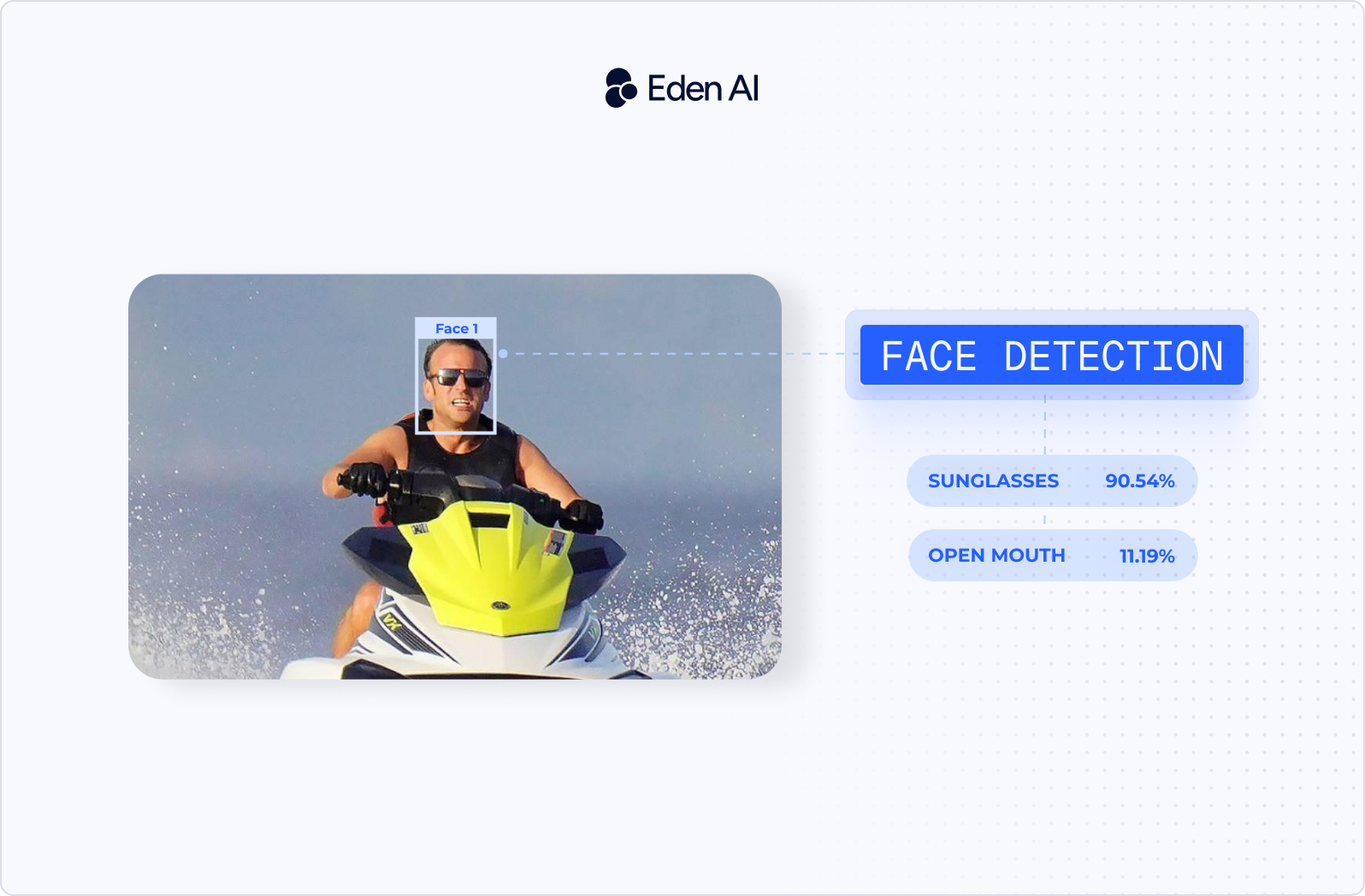
By analyzing facial expressions and other visual cues, Face Detection APIs are capable of identifying emotions like happiness, sadness, anger or surprise. In addition, they can furnish data pertaining to the age and gender of the person in the image.
Face Detection vs Face Recognition
Developers usually confuse face detection AI and face recognition AI when designing computer vision systems. To easily understand:
- Face detection → finds faces in an image
- Face recognition → identifies who the person is
Example:
Teams should choose face detection API only if you need face counting (analytics, foot traffic), camera autofocus or framing, anonymization (blur faces) and content moderation.
Otherwise, teams should use face recognition (with detection) if you need identity verification (KYC, onboarding), access control systems, user authentication and deduplication in image databases.
If your use case involves authentication or identity matching, you’ll need both technologies working together.
Best Free Face Detection APIs and Open Source Models (Updated 2026)
To help developers quickly evaluate the Best Free Face Detection APIs and Open Source Models, the table below compares the top free face detection APIs and open-source models in 2026 based on accuracy, pricing, and best use cases.
OpenCV (Best for Lightweight & Offline Use)
OpenCV is one of the most widely used open-source computer vision libraries, offering fast and lightweight face detection capabilities.
Key features:
- Haar cascades and DNN-based detection
- runs locally (no API required)
- low latency for real-time applications
Pros:
- fully free and open source
- works offline
- easy to integrate
Cons:
- lower accuracy compared to deep learning APIs
- struggles with complex angles and lighting
Best for:
- embedded systems
- edge devices
- simple real-time applications
Google Vision API (Best for Accuracy)
Google Vision API provides highly accurate face detection powered by Google’s deep learning infrastructure.
Key features:
- facial landmarks detection
- emotion analysis
- scalable cloud infrastructure
Pros:
- very high accuracy
- robust documentation
- handles complex images well
Cons:
- limited free tier
- requires cloud integration
Best for:
- production apps needing reliability
- large-scale image processing
AWS Rekognition (Best for Scalable Applications)
AWS Rekognition offers face detection and analysis as part of a broader AI vision suite.
Key features:
- real-time video analysis
- face tracking
- integration with AWS ecosystem
Pros:
- highly scalable
- strong performance in production
- enterprise-ready
Cons:
- pricing can scale quickly
- setup complexity
Best for:
- enterprise systems
- security and monitoring
Clarifai (Best for Custom AI Workflows)
Clarifai provides a flexible AI platform with strong face detection capabilities, designed for teams building custom computer vision pipelines.
Key features:
- pre-trained and customizable models
- workflow-based AI pipelines
- support for multiple vision tasks beyond detection
Pros:
- high accuracy with scalable infrastructure
- flexible model customization
- suitable for complex, multi-step workflows
Cons:
- more complex setup compared to simple APIs
- pricing can increase with advanced usage
Best for:
- teams building custom AI workflows
- applications combining multiple vision tasks
- production systems needing flexibility and scalability
API4AI (Best for Fast Integration & Lightweight Use Cases)
API4AI offers a straightforward face detection API focused on ease of use and quick integration.
Key features:
- simple REST API
- fast response times
- minimal setup required
Pros:
- easy to integrate for developers
- lightweight and fast
- good balance between performance and simplicity
Cons:
- fewer advanced features compared to larger providers
- less customization flexibility
Best for:
- rapid prototyping
- small to mid-scale applications
- developers looking for quick deployment without heavy infrastructure
RetinaFace (Best Open-Source Accuracy)
RetinaFace is a state-of-the-art deep learning model known for its high precision in face detection.
Key features:
- pixel-level face localization
- high accuracy in difficult conditions
- supports multiple frameworks
Pros:
- very high detection accuracy
- strong research backing
Cons:
- requires ML expertise
- heavier to deploy
Best for:
- research projects
- high-precision applications
Limitations of Free Face Detection Tools
While free tools are powerful, they come with trade-offs:
- limited free tiers for APIs
- performance variability across models
- privacy concerns with cloud providers
- bias and fairness issues in datasets
Understanding these limitations is critical when building production systems.
Try Multiple Face Detection APIs in One Place
Instead of choosing a single provider upfront, developers can benefit from testing multiple face detection APIs under the same conditions.
With a unified API like Eden AI, you can:
- compare results across providers (Google, AWS, etc.)
- route requests dynamically based on performance or cost
- build fallback systems for higher reliability
This approach is particularly useful for teams optimizing:
- accuracy vs cost
- latency across regions
- production reliability

.jpg)
.png)