.png)
Summarize this article with:
- OpenRouter is a unified API that lets developers access hundreds of AI models through a single endpoint .
- Using one API to connect to multiple AI APIs makes integration easier, especially with the huge number of AI models like today.
- To choose the best OpenRouter alternative, we first looked at provider coverage , including the number of supported AI providers, the range of LLMs available, and access to more specialized or expert models.
- Best For: Teams that need to combine LLMs with other AI capabilities in production, such as OCR, translation, speech, moderation, or automated workflows, rather than only routing between chat models.
- NanoGPT is a pay-as-you-go model marketplace with no monthly subscription, no commitment, and one of the widest model catalogs available: 979 total models across text, image, video, audio, and embeddings.
TL;DR: The best OpenRouter alternatives in 2026 are Eden AI (500+ models including multimodal AI - best for teams needing more than LLM routing), Portkey (best for production observability and compliance), LiteLLM (best open-source self-hosted option), Requesty (simplest lightweight setup), and Kong AI Gateway (best for enterprise governance). See the full comparison below.
Below is a short comparison of the top 10 OpenRouter alternatives in 2026, based on model coverage, best use case, and pricing.
What is OpenRouter?
OpenRouter is a unified API that lets developers access hundreds of AI models through a single endpoint. Instead of integrating each provider separately, you can use one API to connect to multiple models.
Why choose an API to connect to multiple APIs?
Using one API to connect to multiple AI APIs makes integration easier, especially with the huge number of AI models like today. It helps developers switch models faster, reduce development time, avoid vendor lock-in, and manage routing, fallback, and costs from one place.
How We Compared OpenRouter Alternatives
To choose the best OpenRouter alternative, we first looked at provider coverage, including the number of supported AI providers, the range of LLMs available, and access to more specialized or expert models.
We then compared the features that matter most when selecting an AI Gateway for production, such as routing capabilities, observability, pricing, and infrastructure fit.
Finally, we ranked each OpenRouter alternative based on its best use case, strengths, limitations, and pricing structure, so developers can quickly find the platform that best fits their stack.
Best OpenRouter Alternatives for LLM API Access (2026 Updated)
The best OpenRouter alternatives are Eden AI, Portkey, Requesty, Helicone AI Gateway, LiteLLM, Cloudflare AI Gateway, Together AI, NanoGPT, Vercel AI Gateway and Kong AI Gateway. Below is an in-depth comparison of each platform, including its key differences from OpenRouter, pros and cons, and pricing.
Eden AI
Eden AI is one of the best OpenRouter alternatives in 2026, standing out on two fronts. First, Eden AI covers far more than LLM routing - one API gives access to 500+ models across text, OCR, document parsing, speech, translation, and image analysis, making it the most capable option on this list for teams building multimodal products.
Second, Eden AI is headquartered in France, GDPR-native with EU data residency by default, no data used for training, and a Data Processing Agreement included as standard, not an add-on. For teams where data compliance is a requirement rather than a checkbox, that distinction matters. See the full Eden AI vs OpenRouter breakdown here.

Pros:
- Supports 500+ models both LLMs and Expert Models
- European-Built, GDPR-Native
- Fallback and provider comparison tools
- Cost and performance monitoring
Best For: Teams that need to combine LLMs with other AI capabilities in production, such as OCR, translation, speech, moderation, or automated workflows, rather than only routing between chat models. Also for European companies and startups that cannot route data through US infrastructure without legal review.
Pricing: Pay-as-you-go pricing with no subscription required. For the self-serve AI API Gateway, Eden AI charges a small platform fee.
Portkey
Portkey is an AI gateway and production stack for GenAI applications. It is more focused on production control, observability, and reliability than simple model access, which makes it a strong OpenRouter alternative.

Best For: ngineering teams building LLM applications in production that need monitoring, security, compliance controls, budget tracking, and multi-provider reliability, not just model switching.
Pros:
- Supports 160+ models across providers such as OpenAI, Anthropic, Google, and Mistral
- OpenAI and Anthropic format translation
- Real-time observability
- Input and output guardrails
Cons:
- Focused mostly on LLMs only
- Smaller ecosystem compared to some infrastructure platforms
Pricing: Free plan available. Paid production plan starts at $49/month for 100K requests, with $9 per additional 100K requests up to 3M, and enterprise pricing is custom.
Requesty
Requesty is a lightweight LLM gateway that provides a single endpoint for hundreds of AI models, with minimal setup and a simple multi-provider routing layer.
.png)
Best For: Developers needing simple multi-provider LLM routing.
Pros:
- Supports 400+ models
- Simple integration
- Multi-provider support
- Lightweight architecture
Cons:
- Smaller ecosystem
- Limited enterprise features
Pricing: Free plan with $6 in credits. The paid Pro plan uses pay-as-you-go pricing with a 5% markup on model costs. Enterprise pricing is custom.
Helicone AI Gateway
Helicone AI Gateway is an OpenAI-compatible gateway focused on LLM analytics and monitoring, Helicone is positioned more as a production platform for monitoring and control than as a simple model access layer.
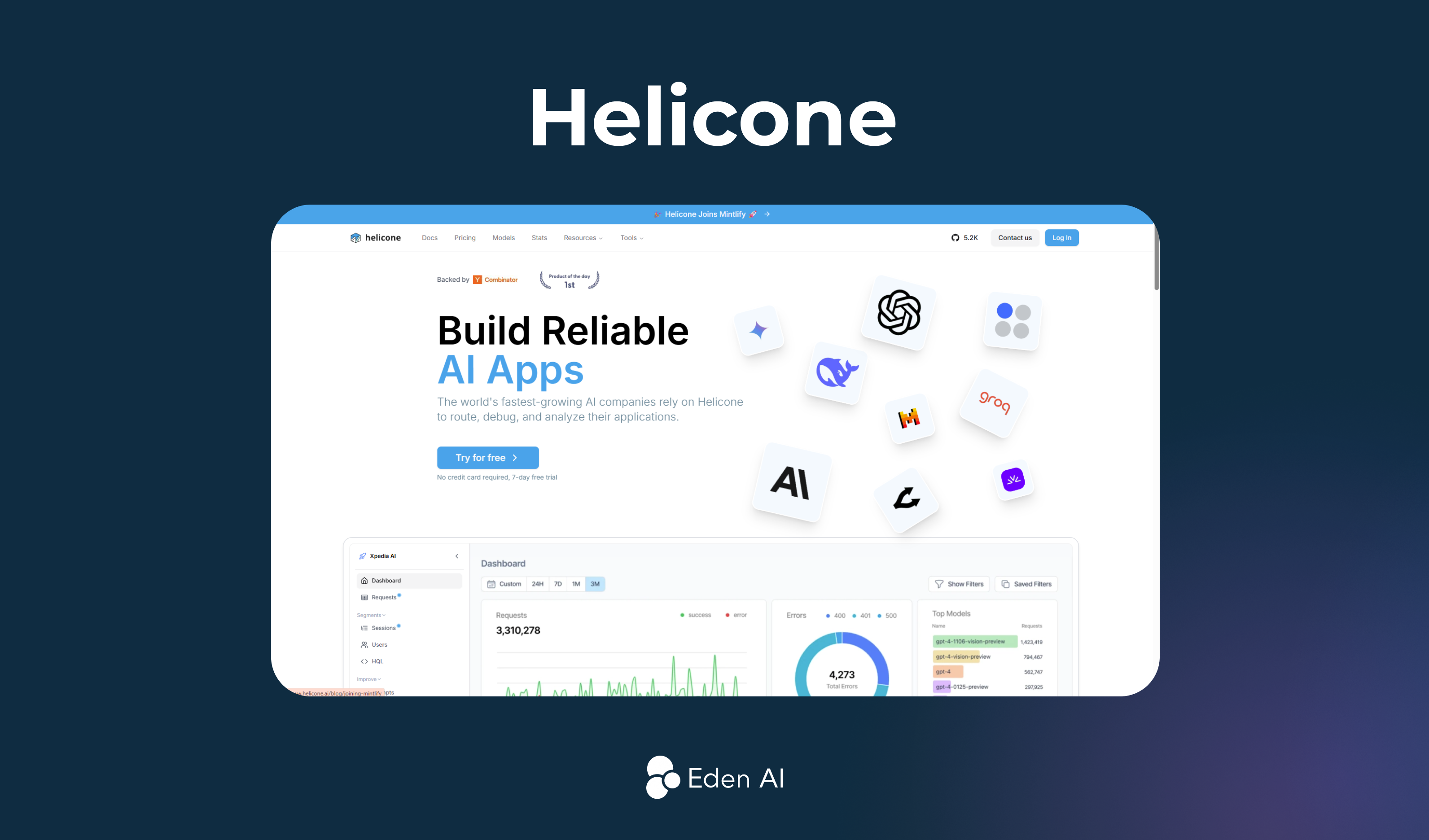
Best For: Teams running LLM applications in production that need observability, session tracking, prompt management, security, rate limits, and caching in the same platform.
Pros:
- Supports 100+ providers
- Detailed request analytics
- Cost tracking dashboards
- Open-source option available
Cons:
- Not primarily a model aggregator
- Limited orchestration capabilities
Pricing: Starts with a free Hobby plan with 10,000 free requests, then Pro at $79/month, with usage-based pricing also applying, Team starts at $799/month.
LiteLLM
LiteLLM is a good alternative to OpenRouter which provides an open-source LLM gateway and Python SDK that acts as a control layer for routing, budgets, authentication, and observability. You can self-host it or manage it within your own stack.
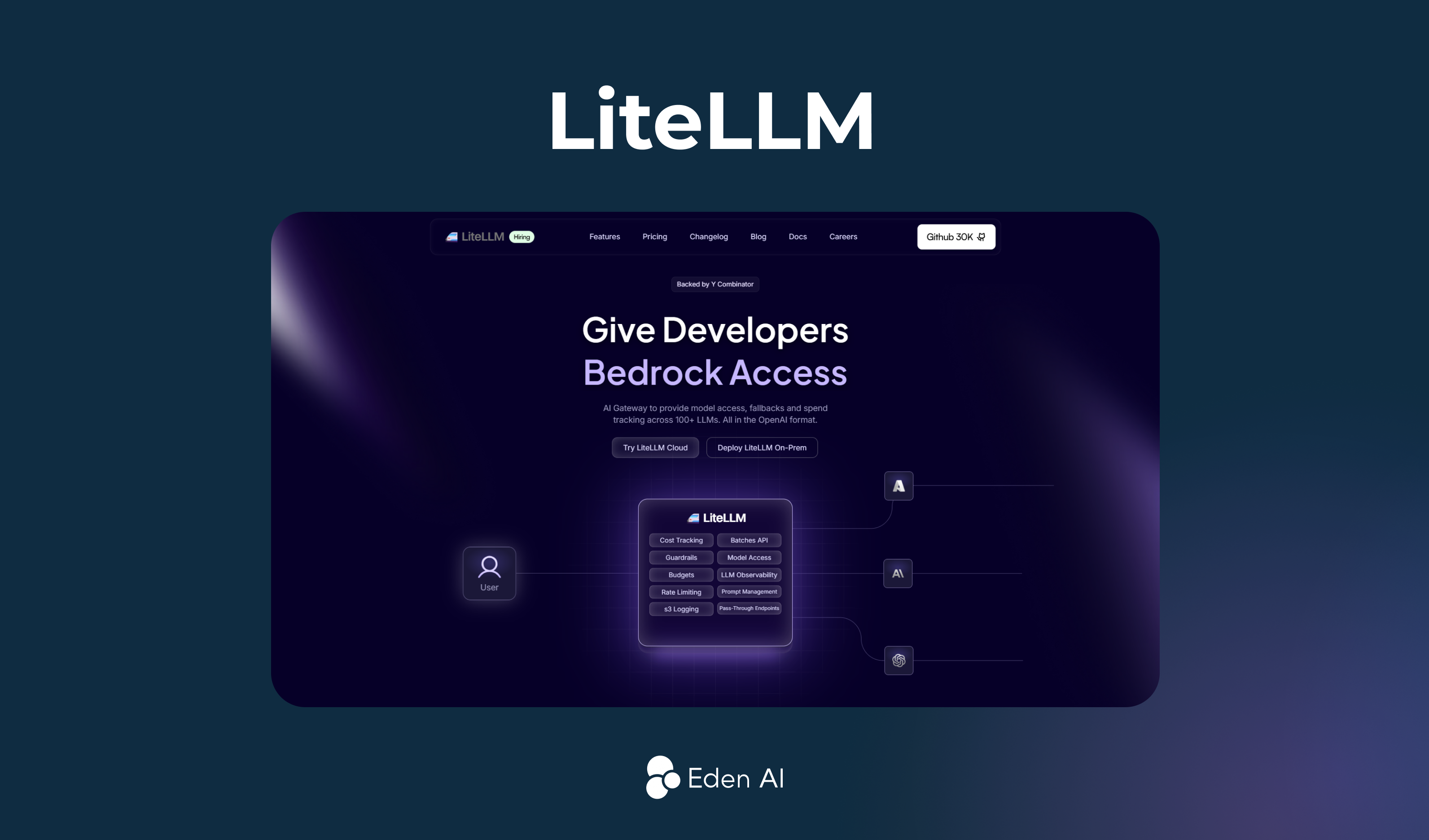
Best For: Platform teams, infrastructure teams, and companies building production LLM stacks that want centralized authentication, virtual keys, spend control, self-hosting options, and team-level governance across many providers.
Pros:
- Supports 100+ models sup
- Open source
- Easy provider switching
Cons:
- Requires self-hosting and maintenance
- Limited built-in observability compared to SaaS gateways
Pricing: Open-source version is free ($0). Enterprise pricing is custom, and the official site highlights OSS plus quote-based enterprise rather than transparent self-serve paid tiers.
Cloudflare AI Gateway
Cloudflare AI Gateway is a free, managed proxy layer that sits between your application and AI providers - giving you caching, rate limiting, fallback routing, and a unified analytics dashboard at no extra cost. Built on Cloudflare's global edge network, it adds near-zero latency while giving engineering teams full visibility into their AI spend across all providers.
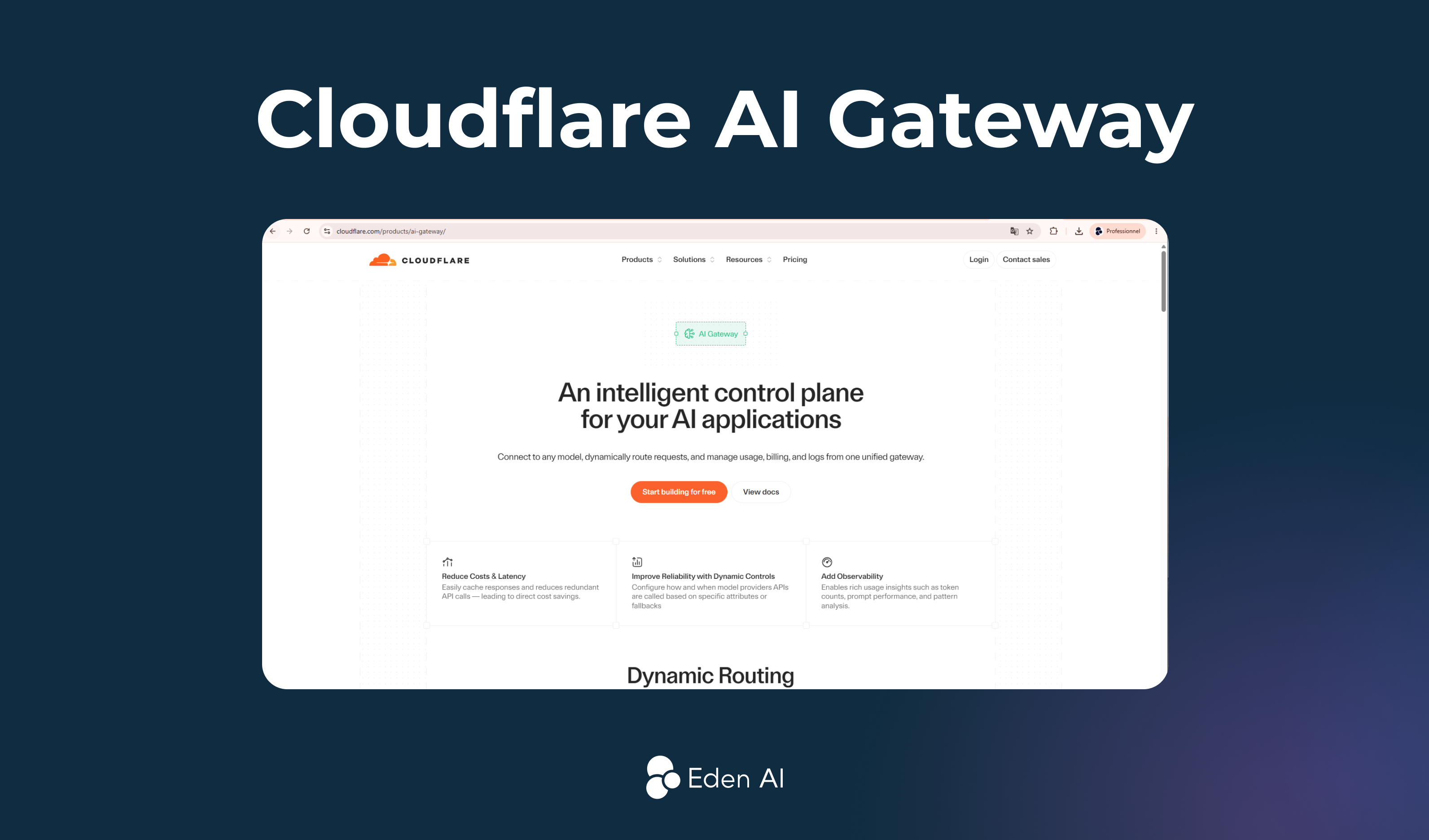
Best For: Teams already hosting on Cloudflare who want AI observability, caching, and fallback routing with zero incremental cost.
Pros:
- Free on all Cloudflare plans including the free tier
- Semantic caching to cut redundant provider calls and reduce costs
- Automatic retry and model fallback on provider errors
- Unified analytics dashboard for token usage, cost, and error tracking across providers
- Rate limiting to protect against budget overruns
Cons:
- Not a model aggregator - doesn't add models beyond what underlying providers offer
- No intelligent cost-based routing across providers
- Limited to teams already within the Cloudflare ecosystem for full benefits
Pricing: Free on all Cloudflare plans, including the free tier.
Together AI
Together AI is an AI-native cloud platform built for open-source model inference, fine-tuning, and GPU compute. Unlike API gateways that aggregate third-party providers, Together AI runs its own optimized inference infrastructure - claiming 2× faster inference and 60% lower cost than standard cloud providers through custom kernels and hardware-level optimizations.
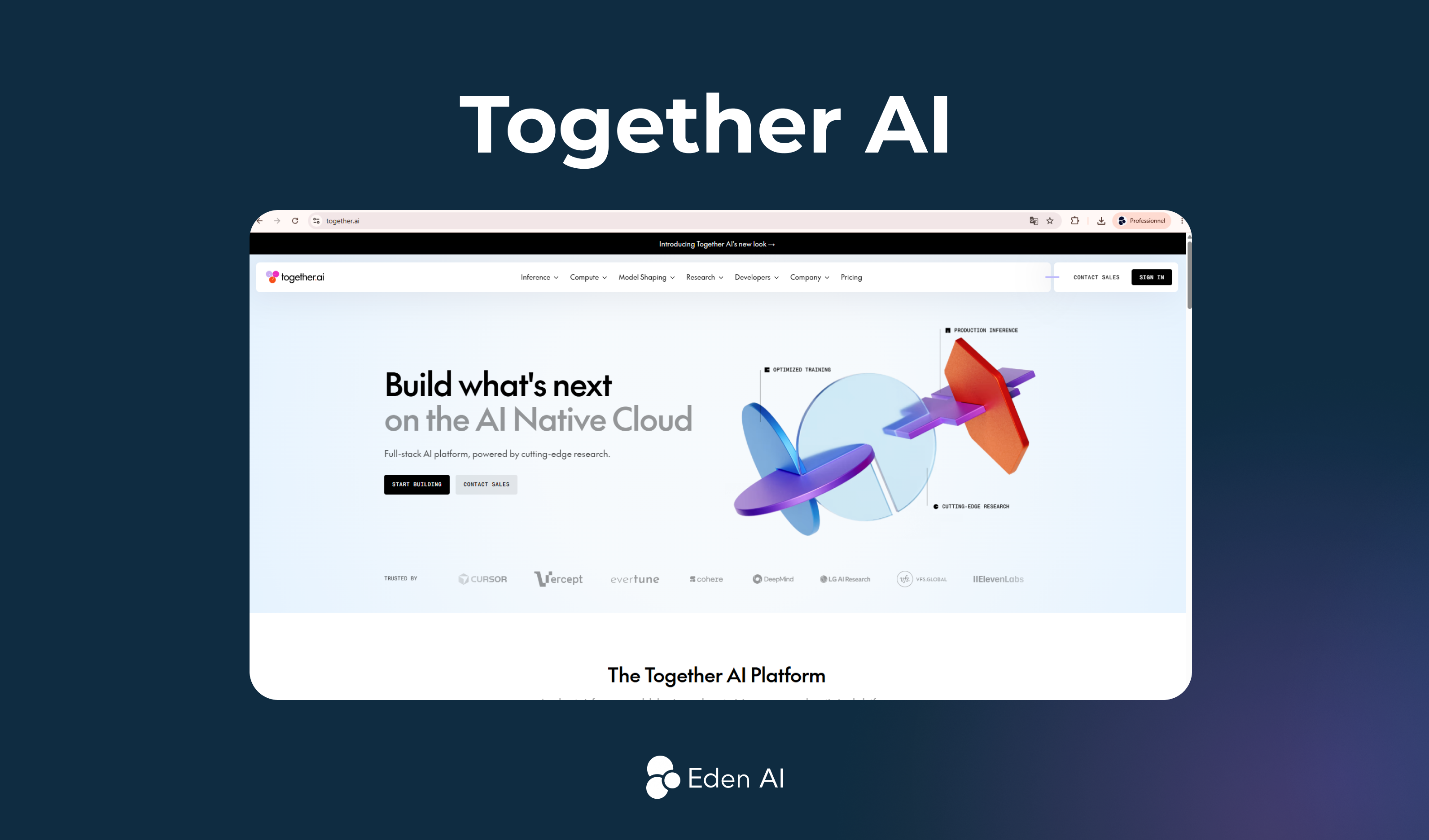
Best For: Engineering teams running primarily open-source models who need fine-tuning and production inference in a single platform.
Pros:
- Serverless open-source model inference with no infrastructure management
- Integrated fine-tuning platform - customize models for your specific use case
- Dedicated GPU clusters available (H100, H200, B200) for high-volume workloads
- Batch inference API for asynchronous, large-scale processing at 50% cost reduction
- OpenAI-compatible API - switch with minimal code changes
Cons:
- No access to proprietary models (GPT-4o, Claude, Gemini) - open-source only
- Not a multi-provider gateway - doesn't unify routing across different providers
Pricing: Pay-per-token with no subscription required. Free credits on sign-up.
NanoGPT
NanoGPT is a pay-as-you-go model marketplace with no monthly subscription, no commitment, and one of the widest model catalogs available: 979 total models across text, image, video, audio, and embeddings.
Its OpenAI-compatible API makes it a drop-in replacement for existing code, and its TEE attestation adds a layer of hardware-level privacy for sensitive workloads.

Best For: Individual developers and hobbyists who want broad model access with zero monthly commitment and no infrastructure to manage.
Pros:
- 979 total models: text, image, video, audio, STT, and embedding models
- No monthly fees: pure pay-per-token pricing
- OpenAI-compatible API with no code refactoring required
- MCP integration: works with Claude Code, Cursor, and MCP-compatible tools
- TEE attestation for secure, privacy-preserving inference
Cons:
- No intelligent routing, fallbacks, or load balancing
- No observability dashboard or cost tracking
- No team management or access controls
- No free tier
Pricing: Pay-per-token with no monthly fees. No free tier.
Vercel AI Gateway
Vercel AI Gateway is a hosted unified API that gives developers access to hundreds of models, with tighter integration with the Vercel AI SDK and Vercel developer stack.

Best For: Teams already building with Vercel, Next.js, or the Vercel AI SDK that want a simple hosted gateway with reliability features and unified billing.
Pros:
- Edge-optimized inference
- Strong Next.js ecosystem integration
- Built-in streaming support
Cons:
- Focused mainly on Vercel ecosystem integration rather than advanced security or compliance tooling
- Less advanced routing features than some dedicated AI gateways
Pricing: Includes $5/month in free AI Gateway credits to start, then usage-based pricing through the Vercel platform.
Kong AI Gateway
Kong AI Gateway is an AI gateway layer built on top of Kong Gateway, designed for enterprise infrastructure and policy platform than a simple hosted model-access layer.

Best For: Large enterprises needing governance and security for AI APIs.
Pros:
- Enterprise security policies
- Strong governance features
- Built on proven API gateway architecture
Cons:
- More complex setup
- Not focused on AI developer experience
Pricing: Includes a 30-day free trial for Kong Konnect. After that, enterprise pricing is custom, and AI Gateway enterprise plugins and AI Gateway Manager are listed as add-ons.
What to check before you switch to OpenRouter altenative
Before switching from OpenRouter to another platform, you should test the product carefully and review key factors such as provider coverage, hosting, pricing, and reliability. Below are 9 important criteria to consider before moving to any OpenRouter alternative.
- Provider coverage: Make sure the platform supports the AI providers and models you already use or plan to test
- Hosting model: Decide whether you need a fully managed service, self-hosted deployment, or hybrid setup.
- Pricing model: Check provider fees, platform markup, routing costs, and whether observability or caching are included.
- Latency and reliability: Review response time, failover, retries, and rate limit handling before moving production traffic.
- Observability: Confirm you can track token usage, costs, errors, latency, and request logs.
- Security and compliance: Check authentication, access control, prompt filtering, data masking, and audit logs if needed.
- Routing features: Verify support for model fallback, load balancing, and rule-based routing.
- Migration effort: Look at API compatibility, SDKs, documentation, and how much code needs to change.
- Scalability: Make sure the gateway can handle your current traffic and future growth.
How to Switch from OpenRouter to an Alternative
Switching from OpenRouter is simpler than most developers expect. Every alternative on this list offers an OpenAI-compatible API, meaning your existing code works as-is. The only two things you change are the base_url and your API key. No refactoring, no new SDK to learn.
Here is what the switch looks like for each platform:
Conclusion
The best OpenRouter alternative depends on your use case. Eden AI is better for multimodal AI and workflows, Portkey for production observability, LiteLLM for open-source control, and Kong for enterprise governance. The right choice depends on whether you prioritize model access, routing, pricing, or infrastructure control. If data privacy and GDPR compliance are requirements, see our guide to the best GDPR-compliant AI gateways in 2026.

.jpg)
.png)